01
Seoul Serene Planning 21 Sept 2026
Planning
How long to stay in Korea for plastic surgery
The length of the trip is not something you can look up. It is set by the follow-up appointments your surgeon schedules and by when that surgeon says you may fly — which is why the return flight is the last thing you book.
There is no published answer to this question, and anyone who gives you a confident number is guessing on your behalf. The length of the trip is set by two things: the follow-up appointments the operating surgeon schedules, which have to happen in Korea, and the date that surgeon says you may fly. Neither is known before the operation.
What this means in practice is simple. Book the outbound flight and the first week of accommodation. Do not book the return. The cost of changing a fixed return ticket, or of missing it, is almost always higher than the cost of buying a flexible one or waiting to buy at all.
The return flight is the last thing you book
A plastic surgery trip has a fixed start and an open end. The consultation and the operation can be scheduled; the healing cannot. A haematoma, a wound that is slow to close, an infection, a swelling that has not settled enough for the surgeon to be comfortable — none of these are rare enough to plan around, and all of them add days.
Three practical consequences follow. Book accommodation that can be extended in place, because moving with a fresh wound and a suitcase is worse than paying more per night. Assume you will not be doing anything else in Korea, and if you want to travel, do it before rather than after. And keep the last week of the trip empty of commitments at home, because the pressure to fly on a date you have already paid for is exactly the pressure that leads people to fly before they should.
The follow-up schedule sets the floor
You cannot leave before the appointments that have to happen in the country. For most facial surgery these are some combination of a wound check in the first few days, a stitch removal, a splint or dressing removal, and a final review at which the surgeon either clears you or does not. That sequence is the floor. Everything else is margin.
Ask for the schedule in writing at the consultation, before you pay a deposit, and ask it as a list of dates rather than a description:
- which days after surgery do I have to attend, and for what
- which of those can be done by another doctor at home, and which cannot
- what happens to the schedule if the wound is not healing as expected
- who I contact, in English, out of hours
- what a follow-up costs if it falls outside the quoted package
Why this page does not print a table of days
Day counts by procedure circulate widely — a week for eyelids, two for bone work, and so on. Every source we could find for those numbers was a clinic or an agency selling the operation, and we do not cite either. No Korean government body, professional college or peer-reviewed source publishes a required minimum stay for cosmetic surgery, because there is not one. The number that matters is the one your operating surgeon writes down for your procedure, on your face, after seeing how it healed. Ask for it in writing, and ask what would make it longer.
Whether you can fly is a clinical decision, not a rule
Cabin pressure is not neutral. The UK Civil Aviation Authority’s guidance for health professionals notes that intestinal gas expands by roughly 30% by volume at a cabin altitude of 8,000 feet, and that patients after an operation are “in a state of increased oxygen consumption due to the trauma of surgery, the increased adrenergic outflow and the possible presence of sepsis”. Where trapped gas or a fresh wound is involved, the aircraft is not a neutral environment to spend eleven hours in.
The CAA does publish intervals, for some procedures. These are the ones it gives for the categories most often asked about, and the thing to notice is what is not among them.
| Procedure, as the CAA categorises it | Interval before flying |
|---|---|
| Laparoscopic (“keyhole”) intervention | About 24 hours |
| Colonoscopy | About 24 hours |
| Abdominal surgery | 10 days |
| Neurosurgery | About 7 days |
| Other eye procedures | 1 week |
| Retinal detachment repair, sulphur hexafluoride | About 2 weeks |
| Retinal detachment repair, perfluoropropane | About 6 weeks |
Source: UK Civil Aviation Authority guidance for health professionals, accessed 21 September 2026. These are UK aviation-medicine intervals for the categories listed, not Korean rules and not cosmetic surgery guidance.
Cosmetic facial surgery does not appear, which is the point. There is no published interval for rhinoplasty, blepharoplasty or facial contouring to look up, because fitness to fly after those operations depends on the individual wound and the individual patient. Elsewhere in the same guidance, on traumatic injury rather than surgery, the CAA tells passengers to “contact their airline to determine their suitability to travel”. That is advice about a different situation, but the principle carries: your operating surgeon makes the clinical call, and the airline can still refuse to carry you.
Get the clearance in writing before you book, name the flight date in the request, and ask the surgeon to state it as a date rather than as “should be fine”.
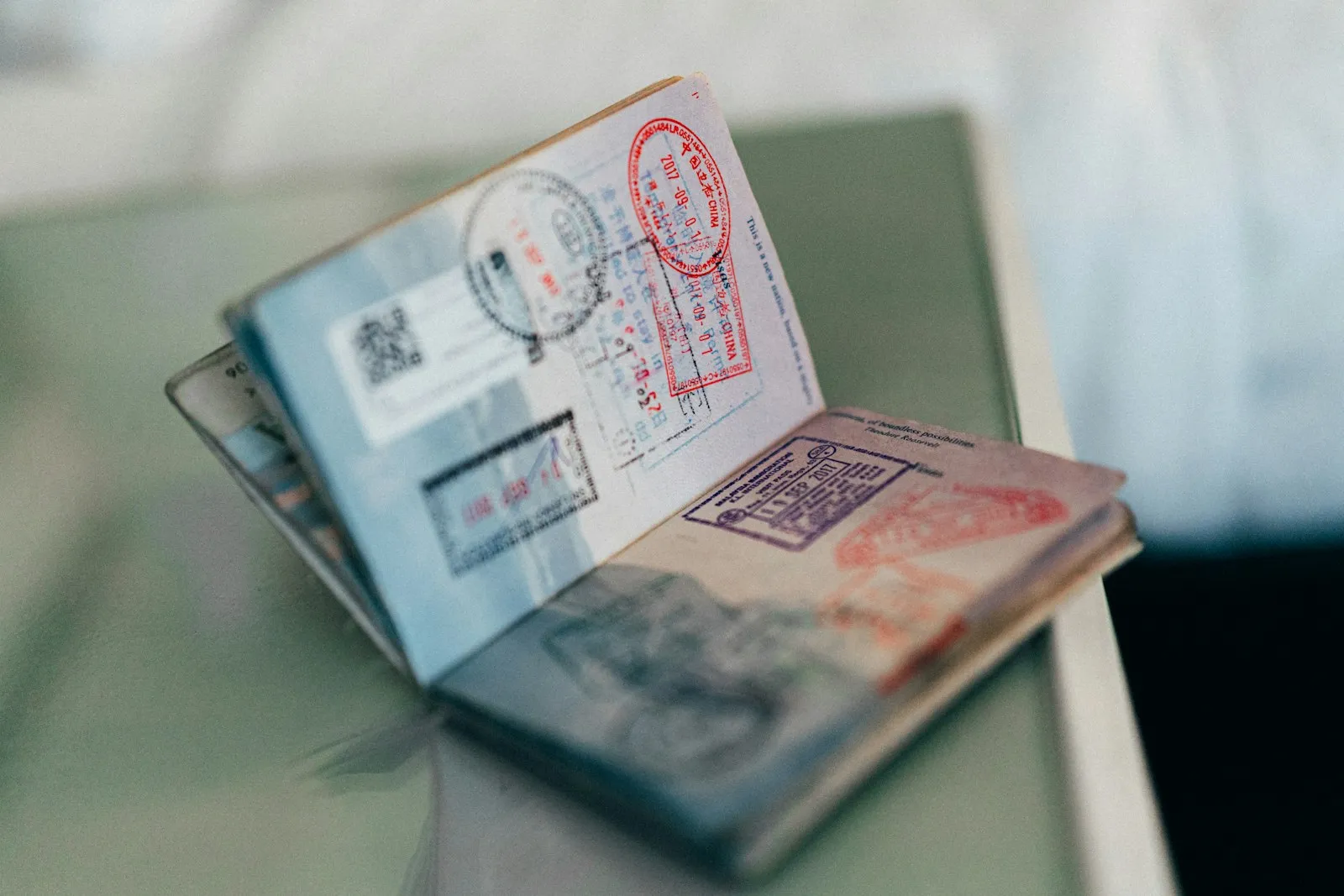
K-ETA and the two medical visa categories
Korea treated 1,170,467 foreign patients in 2024, a rise of 93.2% on the previous year, with plastic surgery accounting for 11.4% of them, according to Ministry of Health and Welfare figures published in April 2025. The entry rules for that traffic sit in two places, and they change.
K-ETA. The Korea Electronic Travel Authorization applies to citizens who may enter Korea without a visa. The official site gives the fee as 10,000 won, roughly 7 to 8 US dollars, with assessment “generally within 72 hours”. A temporary exemption from K-ETA for certain nationalities has been extended repeatedly; the current notice runs from 1 January 2026 to 31 December 2026 and covers “the countries/regions that are currently exempt”. The notice does not list them. You find out by starting an application and selecting your nationality, at which point exempt applicants are shown a pop-up. Exempt travellers may still apply voluntarily and pay the fee, in exchange for benefits such as not having to submit an arrival card.
Two warnings from the site itself are worth repeating. Applications are accepted only at www.k-eta.go.kr or through the official K-ETA mobile app, and the site cautions against “similar agencies/phishing sites that charge high fees under the pretext of providing K-ETA application agency (or expedited) services”. If an agency offers to handle your K-ETA for a fee, they are charging you for a form you can file yourself in minutes.
The medical categories. Korea has two, and Medical Korea and the Korea Tourism Organization describe them the same way. C-3-3 is the short-term medical category, for cases where the period of treatment and travel is 90 days or less; the KTO states it is issued to foreign patients invited by a medical institution or an international patient facilitator, and that the inviting party must be registered for international patients under the Medical Service Act and must apply for confirmation of visa issuance online through Visa.go.kr. G-1-10 is the long-stay category, within one year, covering patients without an institutional invitation as well as accompanying family and carers.
Requirements differ by mission. The Korean embassy in Singapore, for example, lists medical diagnosis records, a confirmed appointment at a Korean hospital, the hospital’s business registration certificate issued within the previous three months, and the facilitator’s valid registration, and states that the visa is valid for three months from issue. That is one embassy’s list, not a national one.
This is the area of the trip most likely to be out of date by the time you read it. Check the rule for your own passport on the K-ETA site and with your nearest Korean embassy or consulate, in that order, and check it again in the month you travel. Do not rely on this page, or any blog, for the version that applies on your entry date.
Travel insurance is written for accidents, not for operations you chose
A standard travel policy is built around the unforeseen. A planned operation is, by definition, foreseen. That mismatch is where the gaps live, and it is why the UK Foreign Office’s South Korea health advice says, specifically of elective treatment, that travellers should “make sure that your travel health insurance covers complications that may arise and repatriation to the UK if required”. It also notes that medical and dental care in South Korea “is usually of a good standard, but can be expensive”.
The FCDO’s general travel insurance guidance is written around emergencies rather than planned procedures, and its warnings still bite: declare existing conditions or pending treatment and tests or risk being uncovered for related complications, remember that emergency transport such as an ambulance is often billed separately, and check whether the policy covers getting home after medical treatment if you cannot use your original ticket.
We cannot tell you what your policy says. Nobody can except the wording. Read it for four specific things, and get the answers in writing from the insurer rather than from a comparison page:
- whether complications of a procedure you travelled for are covered at all, or excluded as elective treatment
- whether an extended stay is covered if your surgeon will not clear you to fly
- whether repatriation is covered, and under what circumstances
- whether a new flight home is covered when the original ticket lapses
If the answer to the first is no, which is common, then the money set aside for complications is your own, and it should be set aside before you travel rather than found afterwards.
What to do next
Work backwards. Get the follow-up schedule and the flying-clearance policy in writing at the consultation stage, before a deposit, because both are answers a serious institution can give in an email. Then book the outbound flight, extendable accommodation, and nothing else.
Before you go, read recovery after surgery in Korea for what the days between the operation and the flight actually involve, and how to choose a clinic in Korea for the checks that should happen before any of this. The checklist collects the questions from both. Carry the number for the Korea Medical Dispute Mediation and Arbitration Agency, 1670-2545, weekdays 09:00 to 18:00, for the case you hope not to need it in.
Sources
- Notice on Extension of K-ETA Temporary Exemption. K-ETA, Ministry of Justice, Republic of Korea. Read 21 Sept 2026.
- Korea Electronic Travel Authorization (K-ETA) — apply. K-ETA, Ministry of Justice, Republic of Korea. Read 21 Sept 2026.
- Medical Visa. Medical Korea (Ministry of Health and Welfare / KHIDI). Read 21 Sept 2026.
- Medical Tourism Visa Issuance. Korea Tourism Organization. Read 21 Sept 2026.
- C-3-3 Medical Tourism Visa: requirements. Embassy of the Republic of Korea to the Republic of Singapore. Read 21 Sept 2026.
- Assessing fitness to fly: surgical conditions. UK Civil Aviation Authority. Read 21 Sept 2026.
- Foreign travel advice: South Korea — Health. UK Foreign, Commonwealth and Development Office. Read 21 Sept 2026.
- Foreign travel insurance. UK Foreign, Commonwealth and Development Office. Read 21 Sept 2026.
- Korea sees record 1.17 mil. foreign patients in 2024. Korea.net (Korean Culture and Information Service). Read 21 Sept 2026.
- Korea Medical Dispute Mediation and Arbitration Agency. K-MEDI. Read 21 Sept 2026.
The Korea surgery planning checklist
One page: the licences to check, the questions to ask in a consultation, what to put in writing, and how long to keep the week free afterwards. Free, and we send it once.
The checklist goes out by email. Until the list opens, write to [email protected] and we will send it back by hand.
Photograph by SUN STUDIO CREATIVE / Unsplash