01
Seoul Serene Planning 22 Sept 2026
Planning
How plastic surgery in Korea works, step by step
From the first message to the flight home there are about a dozen points where something is decided, signed or handed over. Korean law fixes what has to happen at several of them — and almost none of it happens unless you ask.

An operation in Korea is not one event. It is a sequence of about a dozen, and at most of them something is decided, signed or handed from one person to another. The order rarely changes: find an institution, arrange entry, consult, be quoted, consent, be assessed, be operated on, be discharged, be reviewed, fly home.
What makes the Korean version of that sequence worth writing down is that the law attaches to several points in it specifically. A doctor has to explain certain things and take your signature. If the surgeon changes, you have to be told in writing, with the reason. There is a camera in the operating room. You can have copies of your own records. None of that happens by itself. Each one is a right you have to exercise, and the usual moment to discover it is the quarter of an hour before you are wheeled in, which is the worst possible time to be reading about any of this.
The eleven points where something is decided
-
Before you enquire
Establish what kind of institution it is
Korean law sorts medical institutions by size: a 의원 is a clinic, a 병원 is a hospital with thirty beds or more. Most cosmetic surgery in Gangnam happens in the first kind. Separately, an institution that intends to treat foreign patients has to register to do so, and registered institutions are required to carry medical liability insurance. The registers are public through Medical Korea.
Who acts: you, and nobody checks it on your behalf.
-
Before you enquire
Work out who is actually answering you
The person replying in English is usually a consultant or coordinator, not the surgeon and not a doctor. That is not in itself improper. What is improper is an unregistered broker taking a commission on your treatment: in 2016 Korean police reported a case of illegal brokers overcharging Chinese medical tourists. Ask directly whether anyone is being paid a commission on your case, and who.
Who acts: a marketing department, until you ask for a doctor.
-
Two to twelve weeks out
Get permission to enter
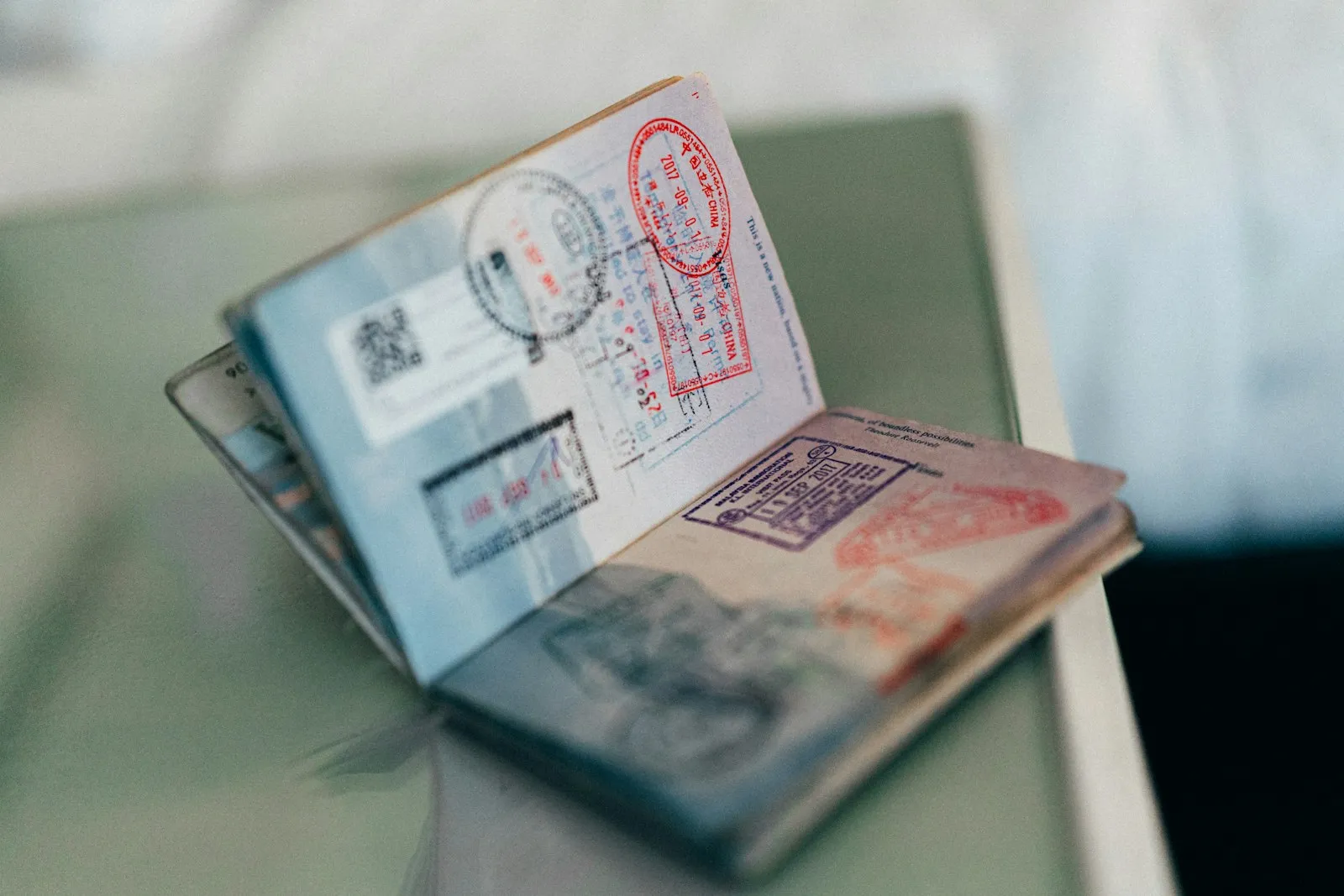
Most short visits run on visa-free entry with a K-ETA. For treatment there are dedicated categories: C-3-3 for a short medical stay and G-1-10 for a longer course of treatment, described on Medical Korea's visa page. Which one applies depends on how long you will be under care, which you cannot answer before the consultation — so read this stage and the follow-up schedule together.
Who acts: you and the Ministry of Justice.
-
At the consultation
Get the operating surgeon's name
Not the clinic's name, not the director's name on the website: the name of the person who will hold the instrument. Article 24-2(2) of the Medical Service Act requires the written consent to state "the name of principal physician … who participates in the surgery". Asking for it at the consultation rather than on the morning gives you time to check the licence and the specialist certificate, which are two different documents.
Who acts: the doctor who explains — who need not be the one who operates. That gap is the whole problem.
-
At the consultation
Ask for the quotation in lines, not as a number
Cosmetic surgery sits outside national health insurance, so no schedule sets the fee and no regulator approves it. The one public reference is the Health Insurance Review and Assessment Service's disclosure of non-covered treatment costs, searchable by institution. It lags behind what clinics actually charge, so read it as a declared figure rather than today's figure — and then insist on separate lines for the surgeon, the anaesthesia, the theatre, the implant by name, the tests, the nights, the medication, every review visit and a revision.
Who acts: the clinic's desk, on request.
-
Before the day
Sign the written consent — then ask for your copy
Article 24-2(1) applies to surgery, transfusion or general anaesthesia that "might cause serious harm to a life or body": the doctor must explain and obtain written consent. Paragraph (2) lists what the explanation has to cover, and paragraph (3) says you may request a copy of the consent and the doctor "shall comply with the request without good cause". A copy in your hand is not a favour. It is the document that establishes what you were told.
Who acts: both of you, in writing.
-
Before the day
Ask for the operating room camera to record
Since 25 September 2023, institutions operating on unconscious patients must have cameras installed. Recording is not automatic: Article 38-2(2) requires it only "where a request is made by a patient or a patient's guardian", and the request may not be refused without one of four stated grounds. Make the request in writing, before the day, and keep the reply.
Who acts: the head of the institution — after you ask.
-
Before the day
Find out who administers the anaesthetic
In February 2026 the Korea Herald reported a National Forensic Service analysis finding 50 deaths linked to cosmetic surgery between 2016 and 2024. Twenty-three were attributed to anaesthesia. Twenty-two of those occurred at clinic-level institutions of fewer than thirty beds, against one at a university hospital, and a specialist anaesthesiologist was present in the operating room in only six of the cases. Ask whether a separately qualified anaesthetist will be present throughout, or whether the operating surgeon is also managing the sedation.
Who acts: ask, and get the answer on the quotation.
-
The day
If anything changes, it has to reach you in writing
This is the provision almost nobody is told about. Article 24-2(4): where the method or details of the surgery, or "the principal physician … who will participate in the surgery", are changed from what you consented to, "the ground for and details of the change shall be informed to the patient in writing". A substitution is not something that may be explained afterwards if you notice. It is something that has to be put in front of you.
Who acts: the doctor, on their own initiative.
-
Discharge
Take the records with you
Article 21(1) lets a patient request to "inspect or copy all or part of records on the patient", and says the institution "shall not refuse such request without good cause". Ask at discharge for the operative record, the discharge summary, the itemised receipt, the surgeon's full name in Korean characters, the maker and model of anything implanted, and the prescriptions. This is far easier while you are in the building than from another continent six weeks later.
Who acts: you become the only person holding your own file.
-
After you leave
Know which body handles a dispute
The Korea Medical Dispute Mediation and Arbitration Agency mediates medical disputes, is open to foreign nationals, aims to conclude in around ninety days, and produces agreements with the effect of a court settlement. Its free line is 1670-2545, weekdays 09:00 to 18:00. Note it before you travel. It is also one of only three routes by which operating-room footage can lawfully be released.
Who acts: K-MEDI, if you start the process.
Three of these are rights, not requests
Stages six, seven and ten are the ones written into statute, and it is worth seeing how narrowly they are drawn.
The consent. Article 24-2(2) lists five things the explanation must contain: the diagnosis, the necessity and method and details of the operation, the name of the explaining or principal doctor, “sequelae or side effects expected to occur typically” afterwards, and what you have to observe before and after. A form that carries none of this, or arrives in Korean only, is not doing the job the statute describes.
The camera. Article 38-2 is more limited than its reputation. It bites only where the patient is unconscious, so an operation under local anaesthesia or light sedation may fall outside it entirely — worth clarifying, because a good deal of eyelid surgery does. Sound recording is switched off unless every person in the room consents, including the staff. Footage must be kept at least thirty days. It may be viewed only for a criminal investigation or court proceedings, by K-MEDI once mediation has begun and with your consent, or where everyone recorded agrees. And under paragraph (8) the institution may charge you the cost of the viewing. As the Korea Times reported when the rule took effect, doctors opposed it. It is a narrow evidentiary tool, not a webcam.
The records. Article 21(1) is the plainest of the three and the one most often left until too late.
What to send before you fly
Two emails, both before the trip. One asking for the consent form in advance with the surgeon's name already entered. One asking for operating-room recording under Article 38-2(2). Keep both replies. Everything in stages six, seven and ten is easier to enforce when the request predates the operation.
What changed on 1 January 2026
Between 2016 and the end of 2025, foreign patients could reclaim the 10 per cent value-added tax on a broad range of cosmetic and dermatological procedures. That scheme has gone. The Korea Herald reported in December 2025 that the refund would terminate on 31 December after the National Assembly omitted the relevant clauses from its revision of the Act on Restriction on Special Cases Concerning Taxation; the South China Morning Post reported the same ending the following day, listing facelifts, skin revitalisation, breast augmentation and double-eyelid surgery among the covered treatments.
The scale is worth knowing, because it tells you how much of the market was built on it. The Herald put refunds at a record 95.5 billion won in 2024, with 82.6 billion won already issued in the first half of 2025, against total foreign-patient medical spending of 1.24 trillion won in 2024 — of which plastic surgery and dermatology accounted for 77.3 per cent.
For planning purposes the consequence is narrow and concrete: budget the full price. A great deal of English-language material still describes the refund as available, some of it written by people selling surgery.
Where the system has no rule at all
Three of the things patients most want standardised are not standardised, and pretending otherwise would be the easiest way to mislead you.
- The pre-operative workup. No Korean rule we could find sets a minimum battery of tests before cosmetic surgery. What you are given depends on the institution and on the anaesthetic. Ask what is being ordered and why.
- Aftercare. There is no published definition of what a clinic must include. It is a set of lines on a quotation, and the number of review visits is negotiable before you sign and not afterwards.
- Price. Non-covered care is priced by the clinic. The HIRA database records declared figures, not agreed ones.
The one published thing that bears on all three is what happens when the sequence breaks. A 2023 systematic review in Annals of Plastic Surgery gathered forty-four studies describing 589 patients who presented with complications after cosmetic surgery abroad; infection was the commonest, and 81 per cent of the bacterial organisms came from the Mycobacterium genus. It counts people who turned up with a problem, so it is not a rate and cannot tell you your odds. What it does establish is the shape of the failure: the problem appears after the patient has gone home, and is handled by people who did not perform the operation and do not hold the file. Stages ten and eleven exist because of that.
Before you start
Work through the stages in order, not in the order a clinic raises them. How to choose a clinic in Korea covers stages one and two in detail; ghost surgery in Korea covers stages four and nine; how long to stay and recovery after surgery pick the sequence up where this page leaves it. The questions on this page are collected on the planning checklist in the order you will need to ask them.
Sources
- Medical Service Act (English translation, Act No. 19818). Korean Law Information Center. Read 22 Sept 2026.
- Medical Service Act, English text. Korean Law Information Center (law.go.kr). Read 21 Sept 2026.
- Medical Service Act (English translation, Articles 3, 3-2 and 24-2). Korea Legislation Research Institute. Read 21 Sept 2026.
- Registered System for International Patients. Medical Korea (Ministry of Health and Welfare / KHIDI). Read 21 Sept 2026.
- Medical Visa. Medical Korea (Ministry of Health and Welfare / KHIDI). Read 21 Sept 2026.
- Korea Electronic Travel Authorization (K-ETA) — apply. K-ETA, Ministry of Justice, Republic of Korea. Read 21 Sept 2026.
- Non-covered treatment cost information (비급여 진료비용 정보). Health Insurance Review and Assessment Service. Read 21 Sept 2026.
- Patients, doctors at loggerheads as operating room CCTV footage made mandatory. The Korea Times. Read 21 Sept 2026.
- When beauty turns fatal: Korea logs 50 plastic surgery deaths since 2016. The Korea Herald. Read 21 Sept 2026.
- Illegal brokers cheated Chinese medical tourists: police. The Korea Times. Read 21 Sept 2026.
- Will end of Korea's aesthetics VAT refund drive medical tourists away?. The Korea Herald. Read 22 Sept 2026.
- South Korea to end cosmetic surgery tax break that fuelled medical tourism boom. South China Morning Post. Read 22 Sept 2026.
- Korea Medical Dispute Mediation and Arbitration Agency. K-MEDI. Read 21 Sept 2026.
- Complications of Medical Tourism in Aesthetic Surgery: A Systematic Review. Annals of Plastic Surgery. Read 21 Sept 2026.
The Korea surgery planning checklist
One page: the licences to check, the questions to ask in a consultation, what to put in writing, and how long to keep the week free afterwards. Free, and we send it once.
The checklist goes out by email. Until the list opens, write to [email protected] and we will send it back by hand.
Photograph by SUN STUDIO CREATIVE / Unsplash