
What plastic surgery costs in Korea, and how to find out
There is no reliable average price, and every English-language price list is published by someone selling surgery. Here is where real numbers come from and what a quotation has to contain.
- 01
Procedures Rhinoplasty in Korea: what it costs and what to ask first
21 Sept 2026 - 02
Procedures Double eyelid surgery in Korea: methods, cost and recovery
21 Sept 2026 - 03
Procedures Facial contouring surgery in Korea: what V-line means
21 Sept 2026

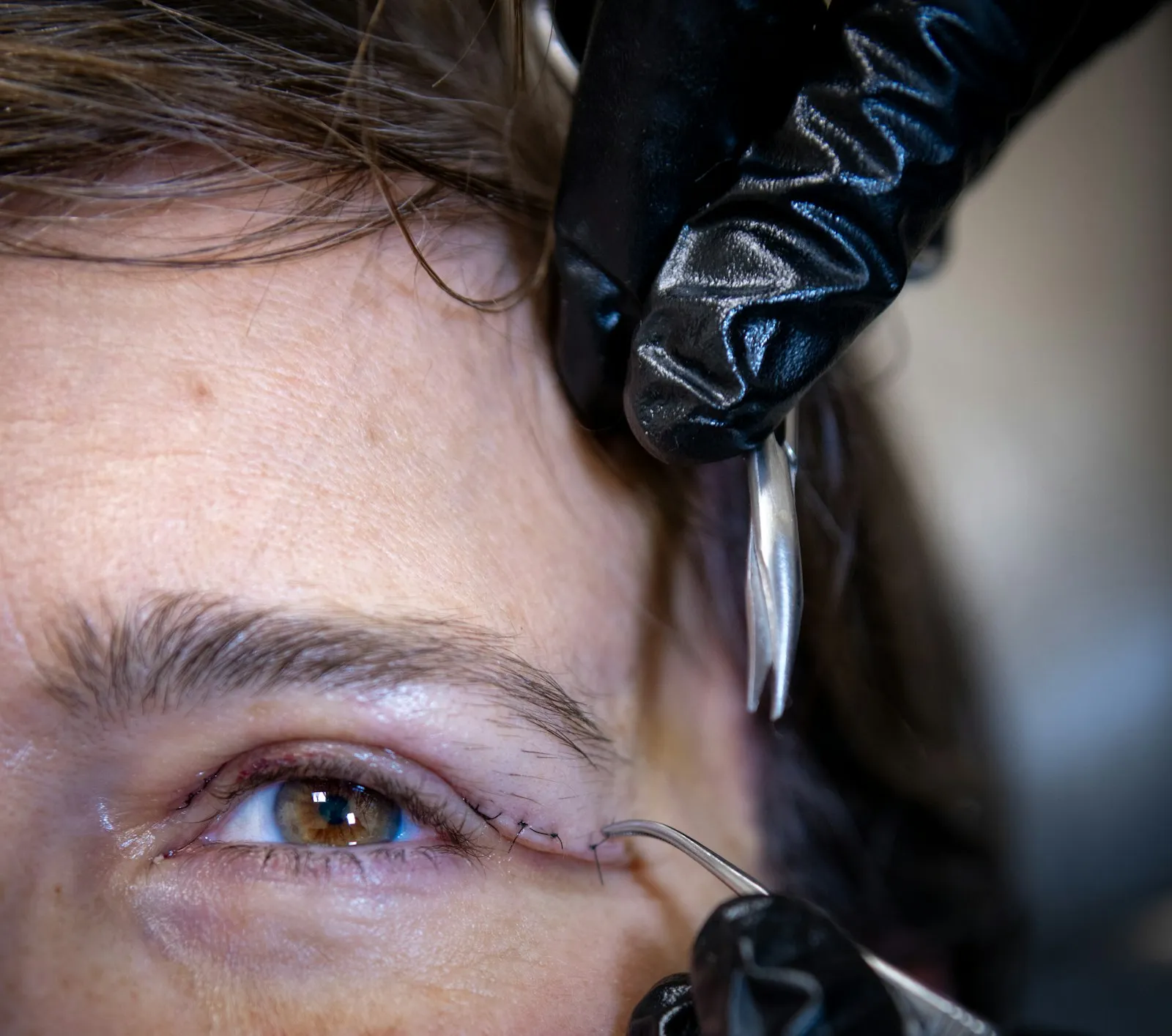
Photographs: Ping Onganankun, Olia Gozha, Judy Beth Morris, rawkkim / Unsplash
We are not going to give you a price list. Every English-language price list for Korean cosmetic surgery that we have been able to find is published by a clinic, an agency, or a site that earns a commission when you book one — and a number with that provenance is advertising wearing a spreadsheet. What follows is the thing those pages leave out: where real numbers come from, and how to make a quotation mean something.
Why no average price exists
Cosmetic surgery in Korea is 비급여 care: outside the national health insurance schedule. Non-covered means exactly what it sounds like. There is no reimbursement rate, no fee schedule anyone is bound by, and no requirement that two clinics on the same street charge anything like the same amount for the same operation.
On top of that, the thing being priced is not standard. “Rhinoplasty” covers an hour of work with an implant and a four-hour reconstruction using rib cartilage. “Double eyelid surgery” covers a buried-suture procedure and a full incisional one with ptosis correction. A clinic quoting the cheap end of that range and a clinic quoting the expensive end may both be quoting honestly for entirely different operations.
So when a page tells you rhinoplasty in Korea costs a tidy range of dollars, the useful question is not whether the number is right. It is: which operation, at which clinic, in which month, including what — and who benefits if you believe it.
The one price source a clinic did not write
Korea publishes more than most countries. HIRA, the Health Insurance Review and Assessment Service, runs a public disclosure of non-covered treatment costs, searchable by institution, covering roughly six hundred legally designated items, and publishes annual statistics on the results — the most recent set was issued in September 2025 and analysed around 693 items across hospital sizes and regions.
Its limits are real and you should know them:
- It is in Korean, with no full English equivalent.
- There is a lag between a clinic changing a price and the database reflecting it, so the declared figure can be out of date.
- It covers designated items, not the bespoke “packages” that foreign patients are usually quoted.
- A declared price is what the institution declared. It is not a promise about your operation.
Even with all of that, it is the only price figure attached to a named Korean clinic that the clinic did not write as marketing. If you are serious about a particular institution, it is worth having someone who reads Korean look it up, and worth asking the clinic why its quotation differs from its declaration if it does.
What an itemised quotation has to contain
A single number in a messaging app is not a quotation. Ask for a document, and check that these lines exist on it, each with a figure:
| Line | What to watch for |
|---|---|
| Surgeon’s fee | Which named surgeon, and whether the fee changes if that surgeon does not operate |
| Anaesthesia | Local, sedation or general, and whether an anaesthetist is separately billed |
| Facility or hospital-day fee | Appears whenever you stay overnight |
| Implants or grafts | Material, maker, and what happens if a different one is used |
| Post-operative care | How many visits, over how long, and what each includes |
| Medication and dressings | Small, and almost never quoted upfront |
| Revision policy | Whether a revision is free, discounted or full price, and for how long |
| VAT | Whether the figure includes it |
| Total | In Korean won, with the date the quotation was issued |
Quote in won. An exchange rate quoted to you in dollars two months before surgery is a forecast, not a price.
The revision line. The difference between "one revision within twelve months at no charge, at the surgeon's clinical discretion" and silence is, on a bad outcome, the difference between an inconvenience and a second trip you are paying for twice.
The costs that are not the surgery
People budget for the operation and are surprised by the rest of it. A realistic total includes:
- Flights and accommodation for the whole stay, which is usually longer than people plan — and the return leg is the one you will want to be able to change.
- The consultation itself, if the clinic charges for it, and whether that fee is deducted from the surgery price.
- Interpretation, if you want an interpreter who is not employed by the clinic selling you the operation.
- Time off work, which is a cost even when it is unpaid leave rather than an invoice.
- The revision that may not happen — and the second set of flights that goes with it. Budgeting nothing for this is a decision, not an oversight.
- Aftercare at home, including any local doctor’s visits once you are back.
How to compare three quotations
Three is the number. One quotation tells you nothing about the market; two turn into a binary; three show you the shape of the range and make the outlier obvious.
- Send the same description of what you want to all three, in writing.
- Ask each for an itemised quotation using the lines above.
- Convert everything to won, on the same day.
- Put them side by side and find every line that appears on two documents and not the third. That missing line is the conversation to have.
- Ask each clinic, in writing, what would make the final bill differ from the quotation.
If a clinic will not produce an itemised document, you have learnt something useful about how it will behave when there is a disagreement.
What a price can tell you about a clinic
A very low headline price is not evidence of a bargain and not evidence of danger. It is evidence that something is being left out of the number, and the only question worth asking is what. Sometimes the answer is benign: a simpler operation, a less senior surgeon, a quieter month. Sometimes it is that the figure covers the surgery and nothing around it.
Pressure applied to a price is a better signal than the price itself. A discount that expires today, a figure that only exists in a chat window, a package whose contents change between messages — these are sales techniques, and they tell you how the institution treats a person who is about to be unconscious in its building.
If the bill and the quotation do not match
Keep every document: the quotation, the consent form, the itemised receipt, and the messages. If you end up in a dispute, the Korea Medical Dispute Mediation and Arbitration Agency mediates medical disputes, is open to foreign nationals, aims to conclude in roughly ninety days, and its mediation agreements carry the force of a court settlement. Its free consultation line is 1670-2545, weekdays 09:00 to 18:00.
Where to go next
The three procedure pages under this guide go through what is actually being priced in each case — what varies, what the technique commits you to, and what changes the number:
And before you send a deposit anywhere, how to choose a plastic surgery clinic in Korea is the list of checks that a quotation cannot answer.
Sources
- Non-covered treatment cost disclosure. Health Insurance Review and Assessment Service (HIRA). Read 21 Sept 2026.
- 2025년 비급여 진료비용 및 제증명수수료 통계 (2025 statistics on non-covered treatment costs and certificate fees). Health Insurance Review and Assessment Service (HIRA). Read 21 Sept 2026.
- Medical tourism in 2024 attracts record 1.17M int'l patients. Korea.net, Ministry of Health and Welfare. Read 21 Sept 2026.
- Medical Service Act (English translation). Korean Law Information Center. Read 21 Sept 2026.
- Korea Medical Dispute Mediation and Arbitration Agency. K-MEDI. Read 21 Sept 2026.

The Korea surgery planning checklist
One page: the licences to check, the questions to ask in a consultation, what to put in writing, and how long to keep the week free afterwards. Free, and we send it once.
The checklist goes out by email. Until the list opens, write to hello@seoulseren.com and we will send it back by hand.
Photograph by Chris Münch / Unsplash